Skerryvore
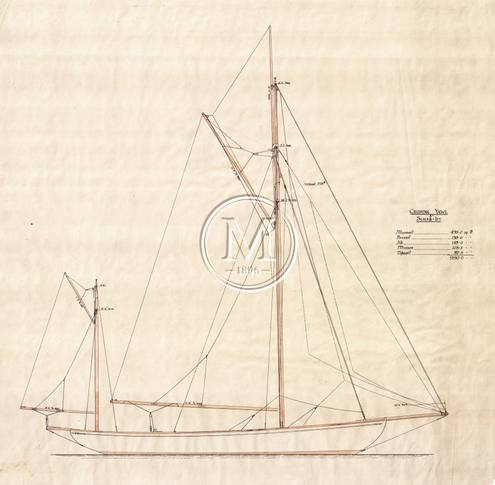
Skerryvore is an auxiliary yawl designed by A. Mylne & Co. as Design 348 and built in 1932 by A M Dickies of Tarbert. The vessel is constructed of pitch pine and mahogany on oak, with dimensions of 9.6 m length on the waterline, 3.0 m beam, and 1.83 m draft. She carries 87.6 m² of sail and is fitted with a Mercedes-Benz four-cylinder oil engine rated at 42 bhp, installed in 1967. The yacht remains in existence.
Specification
Details
Registry & Identity
Design Archive
Historical Context
Design 348, dated 1932, emerged during a significant decade for A. Mylne & Co. The early 1930s saw the firm producing a range of designs from modest cruisers to larger racing yachts, navigating economic conditions that varied considerably from the buoyant 1920s. The choice of Tarbert-based A M Dickies as builder suggests a connection to the established Clyde shipbuilding community, where Mylne designs were frequently built. The auxiliary yawl configuration was a standard choice for cruising vessels of this era, particularly among Scottish owners. The 1967 engine installation reflects the post-war preference for diesel auxiliary power, a practical modernisation that extended the working life of many wooden yachts designed decades earlier.
Ownership
Previous owners
Withheld
Aug 1959 – May 1998
Recorded on payment — claim #23
Crew
No crew records yet. If you’ve sailed on this yacht, claim your place in her history.