Design No. 414
Trondra
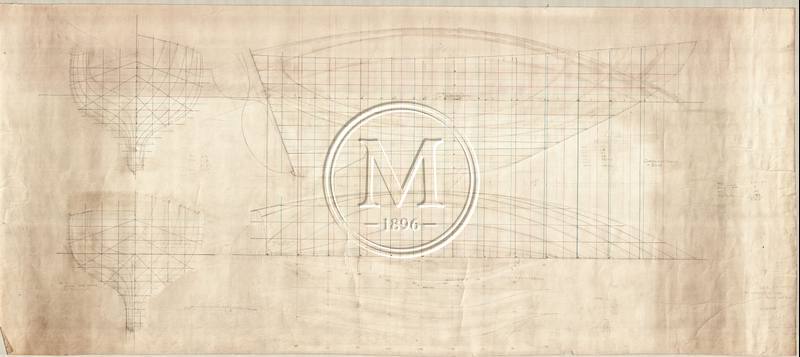
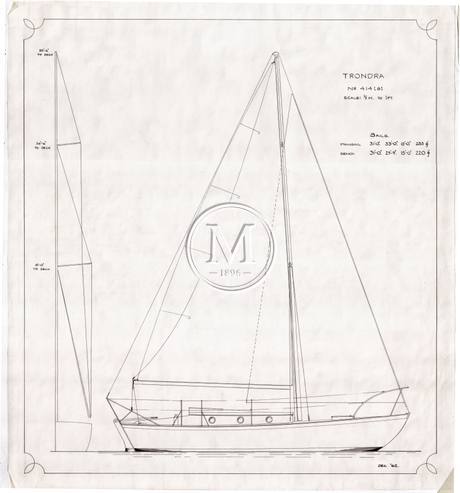
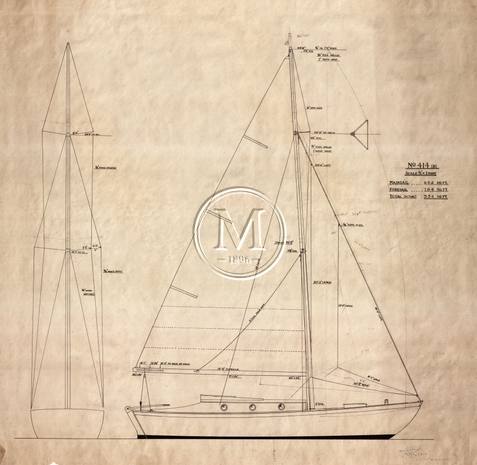
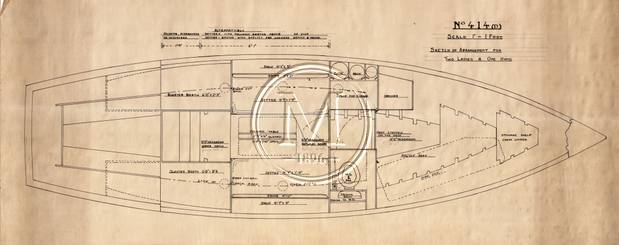
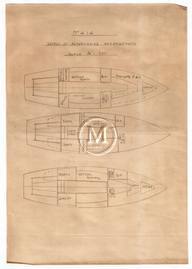
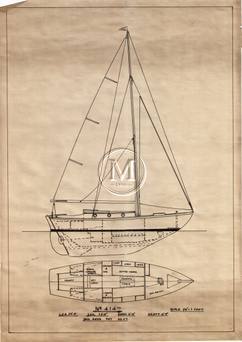
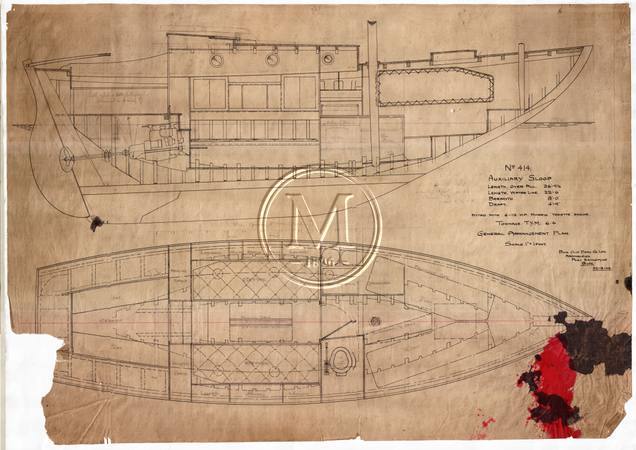
Design 414 is an auxiliary cutter design by Alfred Mylne. Between 1948 and 1951, four yachts were constructed to this design: Isla (1948), Trondra (1949), Trefoil of Kames (1950), and Fraoich (1951). The design comprises 24 drawings held in the archive, providing a detailed record of Mylne's approach to this vessel type.
Original Drawings · 24 sheets
Lines Plan
Sail Plan
Sail Plan
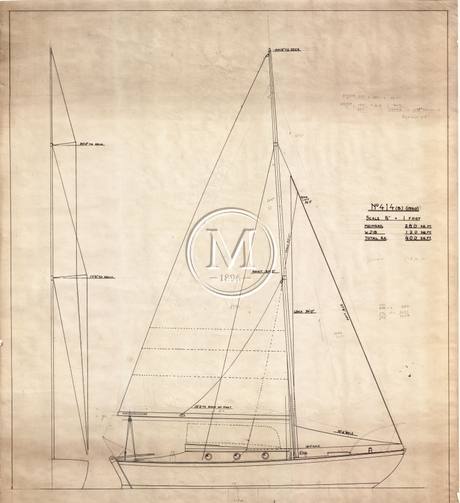
Sail Plan
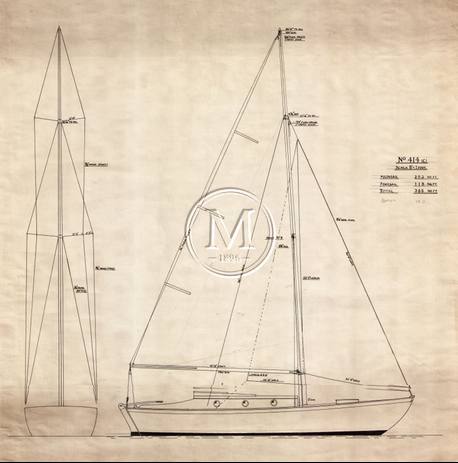
Sail Plan
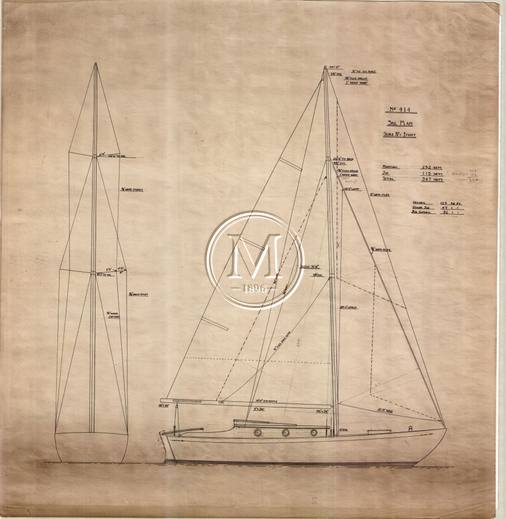
Sail Plan
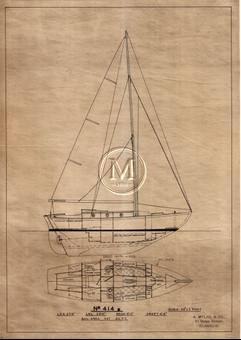
Sail Plan
Sail Plan
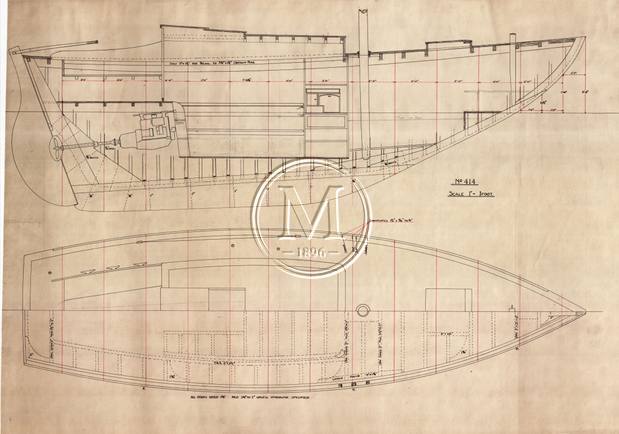
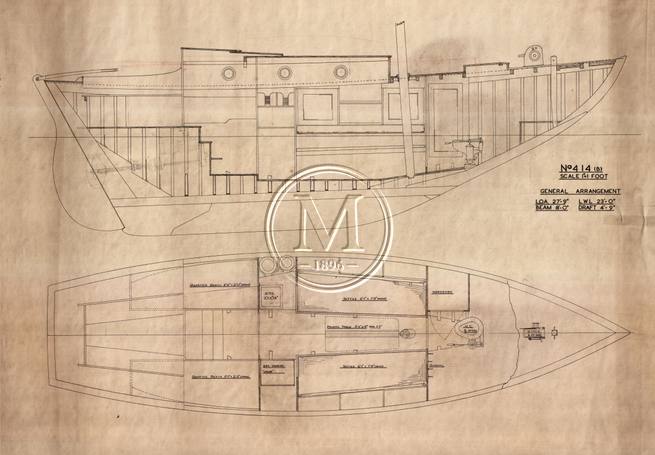
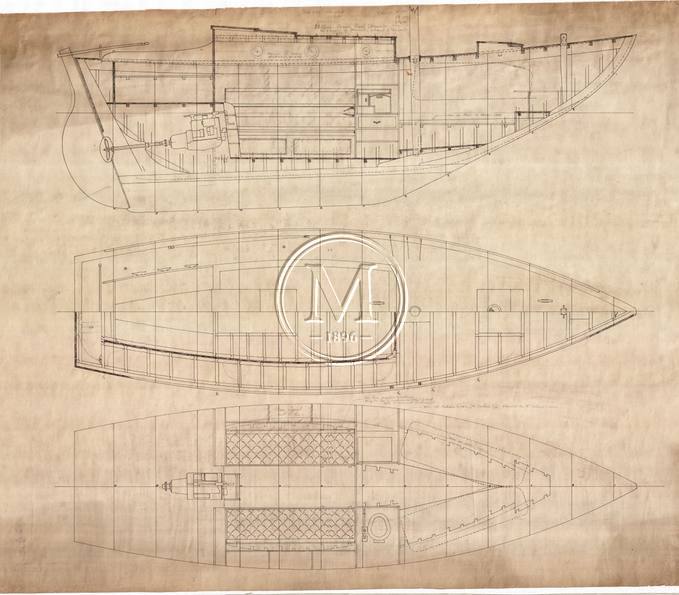
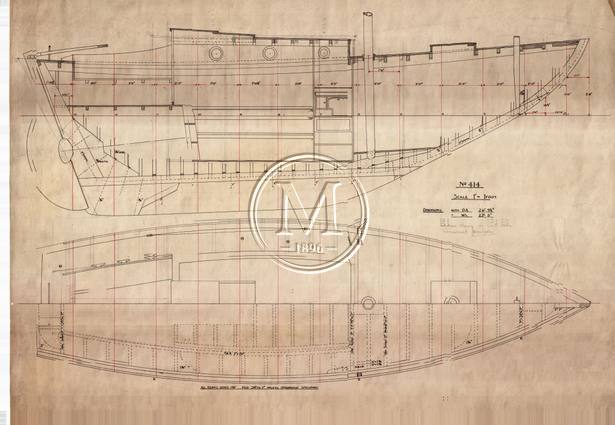
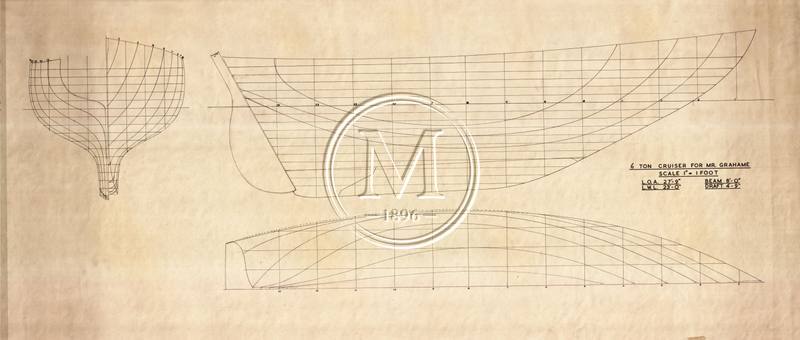
Lines Plan
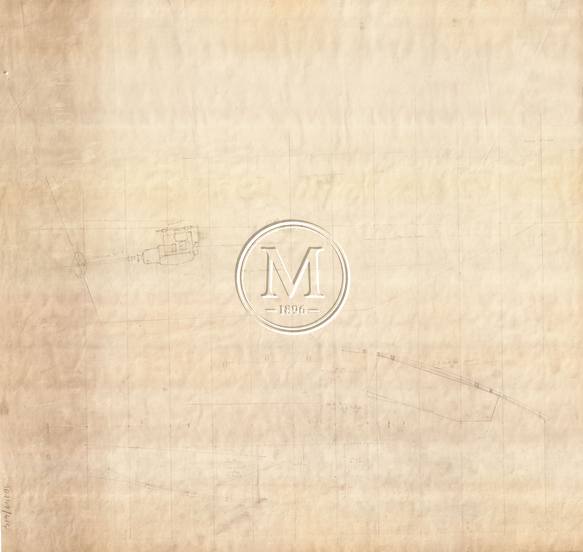
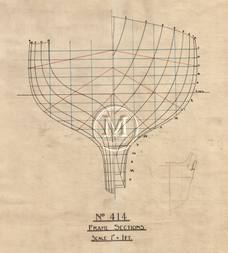
Keel Sections
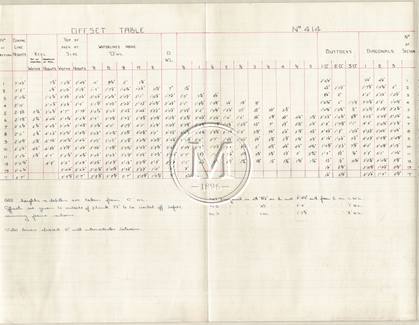
Misc
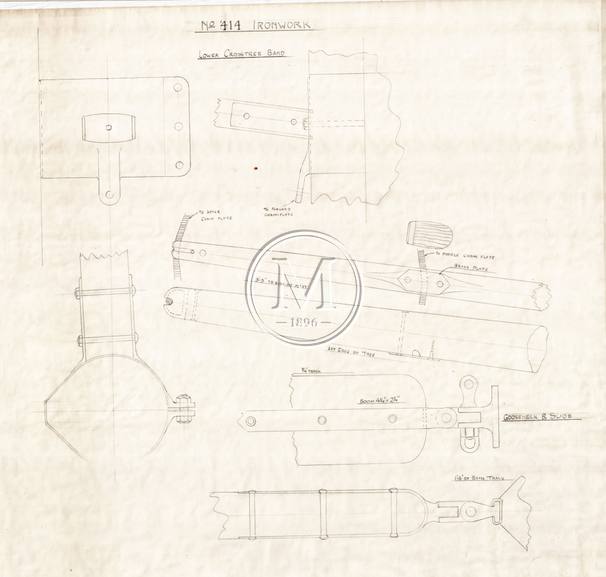
Misc
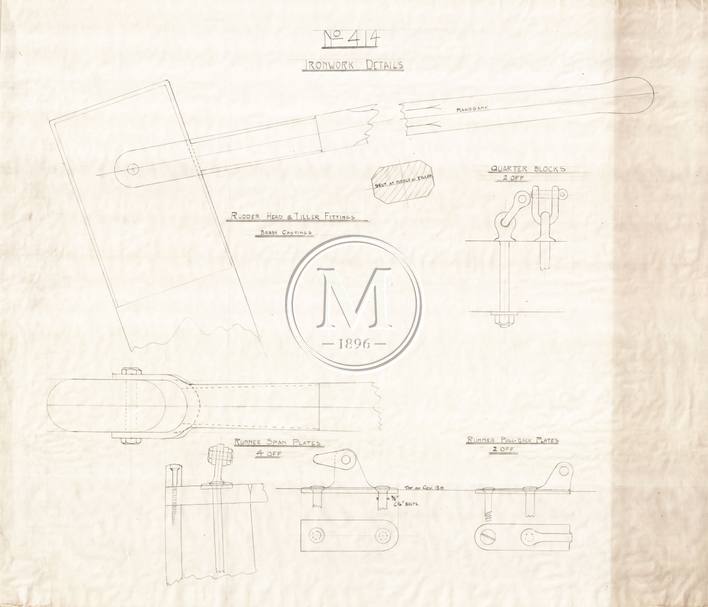
Misc
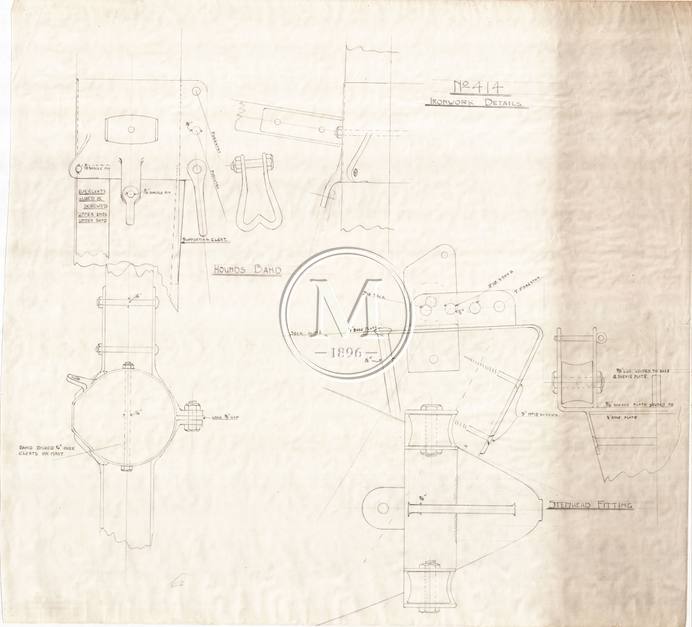
Misc
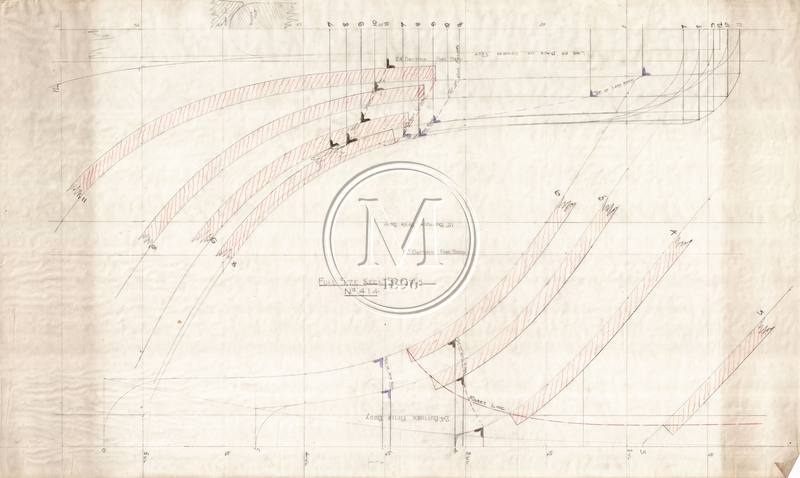
Keel Sections
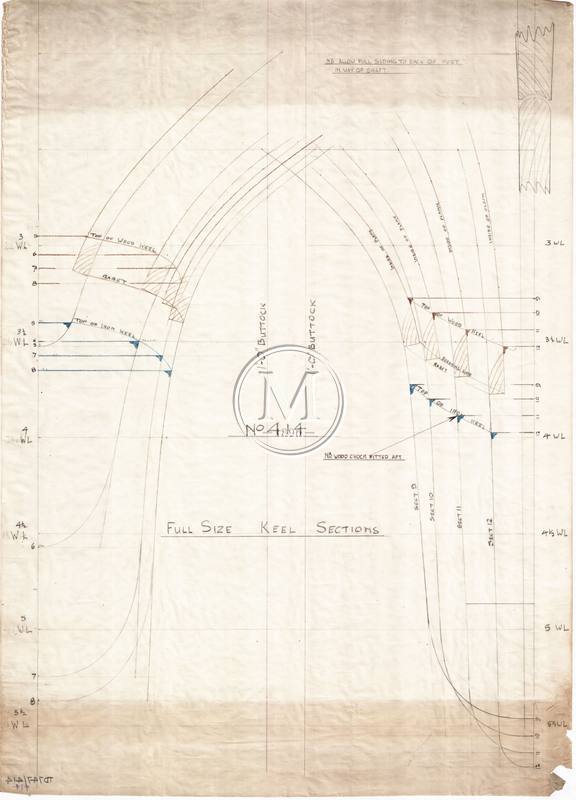
Keel Sections
Dimensions
Notes
I thought I had better bring you up to speed on this as there seems to be some confusion over No.414. There were four boats built to this design but only two had identical hulls, I shall explain; 1/ Flyaway later Tresta, 1948, Lloyds no. 185044, Sail no. 148C, LOA 26.8ft, LWL 22.5ft, Beam 8.1ft, Draft 4.7ft, sail area 367sq ft. 2/ Maranthea later Trondra, 1949, Lloyds no. 183526, Sail no. 78C, LOA 28.2 ft, LWL 22.9ft, Beam 8.1ft, Draft 4.7ft, sail area 460sq ft. 3/ Trefoil of Kames, 1950, Lloyds no. 300193, Sail no. 5C, LOA 28.2ft, LWL 22.9ft, Beam 8.1ft, Draft 4.7ft, Sail area 367sq ft. 4/ Fraoich, 1951, Lloyds no. 184966, Sail no. 149C, LOA 27.7ft, LWL 24ft, Beam 8.2ft, Draft 4.7ft, Sail area 360sq ft. As you can see Tresta is quite a bit smaller than the following three, with Trondra and Trefoil sharing identical hull measurements but Trondra carried considerably more sail, she had I believe a bigger mast [until it broke]. Fraoich we think had a lengthened water line length to conform to the new RORC racing rules and is defiantly the work of J.D Calder you can find an article about her in the Yachting World Annual 1952 although the LWL figure quoted does not match the Lloyds figure or the acknowledged belief among the old sailing fraternity as it was well known that Fraoich was an RORC boat. It is said however that she was not very fast [ I have no records of her in any CCC race results from 51 to 80] but I am sure she was as sea kindly and safe as Trefoil. I have not yet searched old RORC race records for mention of her which would obviously confirm if she was 24ft LWL or not. Stupidly Fraoich was burnt at Sandpoint Marina in 2005 by the owner of the yard for no particular reason. Tresta I think is in Holland, a young couple have her,she is immaculate but with the wrong coachroof, gunwhales and top side plank detail. The last I heard of Trondra was that she was on the East coast of Scotland but despite my detailed searches I have yet to find her, this is a shame as Trondra was a regular adversary for Trefoil from her launch until my records end and although Trefoil commonly won the tussle, I would dearly love to find this famous old yacht. Campbell Leitch who was foreman of Ardmaleish from after the war until, I think, the early 60's, was a considerable help to me during my restoration of Trefoil. Although in his mid 90's he remembered well that Alfred senior visited the yard every week to check up on the construction of Trefoil, he was most insistent on several points of detail. My father was a keen yachtsman and amateur yacht designer at this time,[he owned a Glen Class] and knew Alfred senior quite well, he says that although 'retired' he wanted to perfect a 'standard cruiser' to leave to young Alfred as a present, a legacy for the future. It makes sense as many other yacht designers were also endeavouring to produce a 'standard yacht' suitable for mass production or at least to be built 'en spec'. This to me explains the variations in hull dimensions and sail areas, altering lines and detail until he felt he had got the design perfect but alas these boats turned out to be too expensive for this market, with only these four being built. It is interesting to note that Trefoil cost £2500 to build, the same as a 5 bedroom detached villa in a posh part of Glasgow in 1950, and was the talk of the Clyde for years due to her quality and price. This market was eventually filled in Scotland of course by, Vertues, Lornes and Honeybees, similar sized yachts but at a fraction of the cost. As a side comment, before my father bought his Glen, he was interested in a new Loch Long. He visited all the yards on the Clyde as they would all build you one, the pricing ranged however from £50 for a completed boat with sails and spars at McAlistairs, to £100 at McGruers or Robertsons of Sandbank, to £250 at Mylnes or Fifes! You ask of previous owners, Trefoil has had only one, Ms Jean Wilson later Keppie, one of the most famous yacht owners in Scotland and the Uk's first female Chartered Accountant. She bought her when the hull was complete in the spring of 1950 and ordered the completion to a simple and functional design. She was launched in early August and sailed to her first anchorage of Colintraive. A gale blew that weekend wrecking one yacht on the village shore with Trefoil only surviving as Jean and her two wee daughters were aboard. Jean went on to race Trefoil and do extensive cruising for the next 54 years, being the main contributor to the CCC cruising directions and drawing the 40 charts that accompany that book on her saloon table. She was an institution on the Clyde with Trefoil a consistent competitor in nearly every CCC event. The 'Tobermory Race' was a big thing back then and Trefoil held her head up well over the years, winning both legs in 53 and line honours when ever it was windy. My father remembers a race in the 50's when the race started in Port Bannatine in force 6 plus and Trefoil headed out and later disappeared in the mirk and spray en-route to Ardrishaig. Several hours later the first yacht appeared at the finish line expecting the 'gun' only to be met by Jean and her two daughters sitting on the end of the sea wall shouting 'what kapt ya', they had been there for ages!.. When I went to be vetted by her in her home in Edinburgh before being allowed to buy Trefoil, I asked her about reefing, she replied quite simply,'you put the first reef in at force 6, that will take you to force 8, then put the second reef in and that will take you to anything at all!' I laughed she having a dry sense of humour, only later discovering that it was true. One day I put both reefs in at force 7 and she was underpowered, I have sailed all my life but never known a yacht so capable of standing up to gale force winds, she does it so easily it is alarming. Jean sadly died on Dec 31st 2007 at the age of 94, her daughters say of a broken heart due to selling Trefoil but she had the biggest funeral I have ever seen with people unable to get into the church. The congregation was a who's who of the Scottish sailing set. In Tobermory one summers day about 2007 the forecast was for F6-7 N-NE and I had been waiting to get to Barra for days and thought right lets go.. Sailing on my own I had no one else to consult so as yachts were arriving, trying to find shelter from the imminent strong wind, I headed out to sea. At Ardnamurchan the wind was 6 NE and with full main and a couple of turns on the roller furler I headed out towards Barra. Physically shaking with fear I sailed West into poor visibility and a huge rolling sea. About 10 miles past there the wind got up quite quickly and I put the first reef in and a couple more turns on the furler and went below to make lunch. Whilst eating my beans on toast on the varnished saloon table with perfect little fiddles, I realised that Trefoil was as happy as could be, I was still scared but she was not, I began to laugh almost uncontrollably. There Was Nothing To Worry About... On deck the spray was flying, the sea was enormous but Trefoil was happy, lifting so gracefully to every wave, such poise, such exquisite design, no weather helm or harsh reactions, a joy pure joy. Soon after I put the second reef in as it was a full gale now but I was singing and happy and saddened soon after to see the hills of Barra appear out of the gloom. I arrived in Castlebay the only visiting yacht with a new found confidence in my amazing old yacht. Jean kept a log of every sea mile she did in Trefoil, I have done the same while at sea and during the winter months, this therefore means that a consistent record exists for her whole life, surely a very rare thing. Trefoil has such a complete provenance with dozens of articles written about her, from CCC journals [I have every one] to Yachting World and during my restoration, Yachting Life. There are hundreds of photographs, sketches, poems, stories. So many it is hard to pick a few to send, please let me know how would be best to copy and send any that you may want. I attach one photo and an article from the 1966 CCC journal about the Round Bute Race [a race I have subsequently won in her], please read carefully and between the lines, Jean customary understatement of the weather is evident. I have never yet had solid water in the cockpit! Please let me know your thoughts, Yours Robin. Coutessy Robin Wishart 16-9-13
Yachts in the Register · 4
Historical Context
The late 1940s and early 1950s marked a recovery period for British yacht building following the Second World War. Design 414 belongs to this transitional phase in Mylne's career. The auxiliary cutter—a decked sailing vessel with engine power—became an increasingly popular configuration for cruising yachts in this era. The spacing of builds from 1948 to 1951 reflects the gradual resumption of leisure yacht construction and the demand for practical, seaworthy designs. Mylne's continued productivity during these years demonstrates his established reputation among clients and builders seeking reliable, proven designs.